
Introduction
If you grew up with the idea that one country means one license, the United States is a surprise. Here, nursing is more like a federation of small countries: every state has its own rules, its own paperwork and its own final say on who can work with patients.
So who actually gives you the license?
Let’s start from the top. There is no single federal “super‑board” that licenses every nurse in America. Instead, each state has a Board of Nursing that makes the decisions for its own territory. These boards decide what counts as proper education, which documents they want to see, how often you renew and what happens if something goes wrong in practice.
On paper they cooperate through the National Council of State Boards of Nursing, which also owns and runs the NCLEX exam that everyone has to pass. But when it comes to the license itself, it is always your state that says yes or no.
A simple rule of thumb: you are licensed by a state, and you must obey the rules of the state where your patient is sitting, even if you are talking to them through a laptop from hundreds of miles away.
First step: getting in the system at all
Imagine you are just starting out. You finish a nursing program, you are full of energy and you are ready to work. What happens next?
- You choose a state.
- You send your transcripts, fingerprints, application and fees to that state’s Board of Nursing.
- The board checks your education and your background.
- You pass the NCLEX‑RN or NCLEX‑PN exam.
Only after this does your first license appear in the system, and it usually comes as a classic single‑state license, valid only in that one state.
From the outside it looks like a lot of bureaucracy. From the board’s perspective it is a safety gate: their way of saying “we have seen your education, we have checked your record and we trust you with our residents.”
How we can help you prepare for NCLEX?
NCLEX is the critical gate between your nursing school and your first license, and every state expects you to pass it. We help you build a realistic study plan, choose the right prep strategy for your level, and go into the exam with a clear idea of what to expect.
Then life happens: moving, travel jobs, telehealth
Now imagine a few years later. Maybe you are moving to another state, maybe you want to follow a partner, or you just see a great job posting in a different city. This is the moment when many nurses discover that the United States really behaves like many small countries.
Your original license does not automatically move with you. The new state wants to meet you too.
This is where licensure by endorsement enters the story. In plain language, endorsement is one state asking “can we see the file on this nurse” instead of making you repeat the NCLEX.
The new board checks three big things:
- that you already hold a valid license in another U.S. state
- that you passed NCLEX or another accepted exam in the past
- that your existing license is clean and in good standing
On top of that, it often adds its own packet of forms, criminal background checks and fees. It is the same person, the same education, the same exam result, but a different “small country” re‑running its own checklist.
If this feels repetitive, you are not wrong. The logic is just different: every state is legally responsible for the safety of its own population, so it does not simply trust that another board has done a good job.
Why do states keep rechecking the same education?
At this point many nurses ask a fair question: “If I already passed NCLEX, why is everyone still asking about my school and my transcripts?”
There are a few honest answers.
First, the laws differ. Each state has its own Nurse Practice Act, and some are stricter about clinical hours, specific course content or criminal history than others. To apply its law, the board needs to see your education through its own lens.
Second, boards are built to protect patients, not careers. Their job is to say “no” when something does not look right, even if that means extra work for a qualified nurse. So they repeat background checks and license verification again and again.
Third, the systems themselves are different. One state uses a shared tool like Nursys to pull your license history in one click. Another still prefers original forms, mailed verifications or specific credential evaluations.
If you think of states as countries, it becomes less surprising. When you move abroad, immigration does not say “oh, you had a visa somewhere else, welcome in.” It takes your own documents, runs its own checks and only then stamps your passport.
A quick side path: multistate licenses
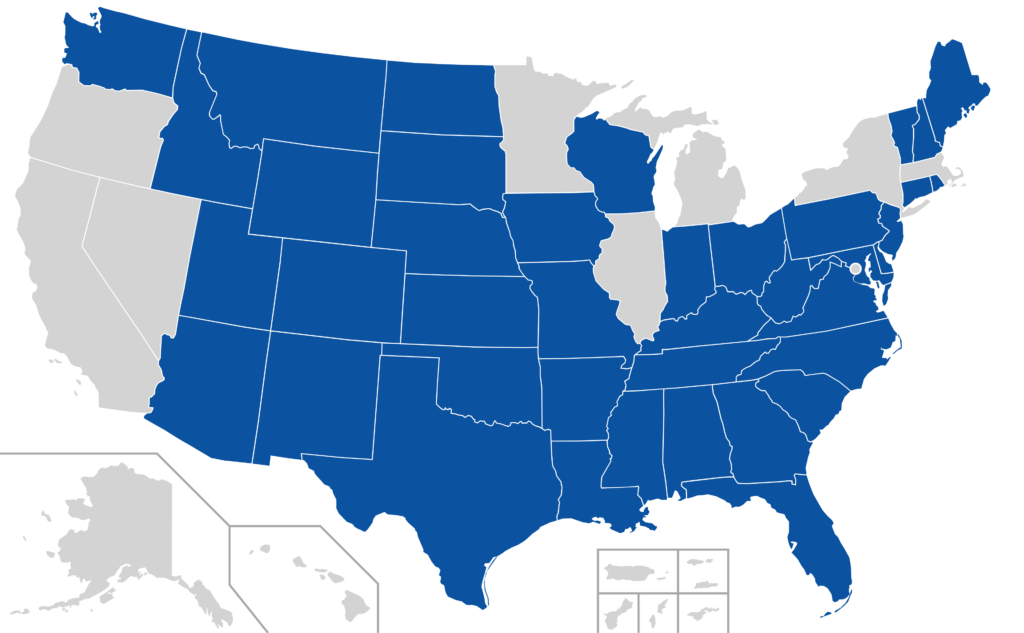
You have probably heard about the Nurse Licensure Compact and multistate licenses. In compact states, eligible nurses can hold one multistate license that works in all member states without separate licenses each time.
It is a smart attempt to connect several of these “small countries” into a shared travel zone, especially useful for travel nursing and telehealth. Because there are many details and exceptions, most clinics and consultants treat NLC as a separate topic with its own guide.
We also have an article about the NLC / Compact License.
When your nursing school was outside the U.S.
Now let’s change the starting point. What if you studied nursing abroad and want to bring that career to the United States?
Here the story gains a couple of extra chapters.
Before a state board even thinks about NCLEX, it usually wants an independent opinion on your education. That is where organizations like CGFNS International come in. They compare your program, subjects and clinical hours with U.S. expectations and issue a report or certificate.
Many states will not let a foreign‑educated nurse sit the NCLEX without this kind of evaluation. On top of that, English language testing is often part of the package.
Only after these steps do you return to the familiar path: choose a state, apply for initial licensure, pass NCLEX, receive your first license and then, if needed, move to other states through endorsement or compact options.
For an international nurse it can feel like a labyrinth of forms, acronyms and agencies. But structurally it is still the same idea: a state wants to know who you are, how you were trained and whether that training matches its own rules.
Turning the maze into a map
If you read this and feel that the system is complicated, that’s an honest reaction. It is complicated. It grew over decades, with every state adding its own layers on top of a shared exam.
The good news is that it behaves predictably once you accept the basic truth:
- there is no single U.S. license, only state licenses
- your first license opens the door, but does not teleport you into every other state
- moving on the map means choosing a route: endorsement, multistate license or a mix of both
Once you see the system as a map instead of a wall, it becomes much easier to make decisions: which state should be first, where the paperwork is realistic for your situation, how to plan the next steps rather than reacting to surprises.
If you would like someone to sit on your side of the table, look at your background and help you choose a state, plan NCLEX preparation and organize your licensing steps, this is exactly what our team does every day. The rules may be complex, but your personal roadmap does not have to be!